Meme Coin Trading as a Full-Time Job
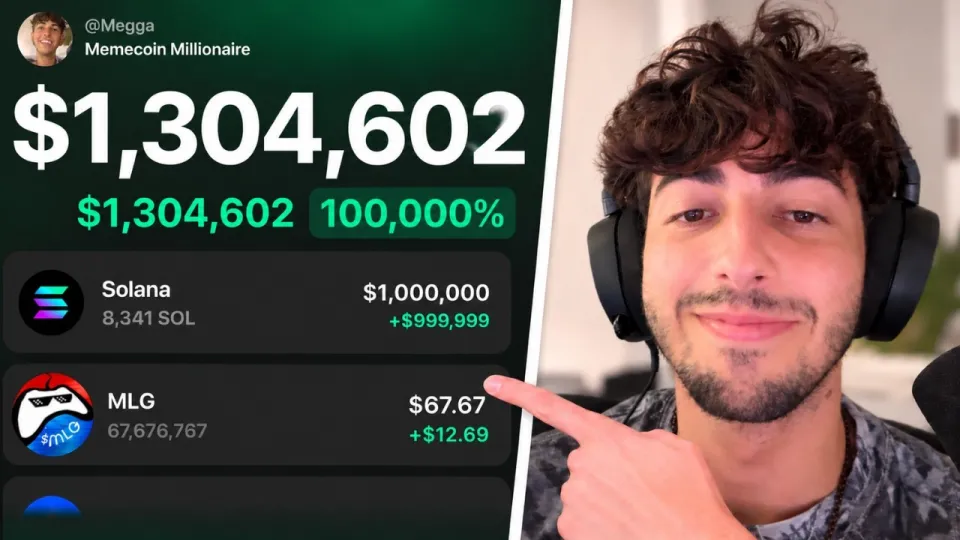
Video: How I Made $1,000,000 Trading Memecoins (FULL BREAKDOWN)
Need articles like this for your video? They help promote it on YouTube and Google — order them in the Telegram bot @sat_sit_bot. Articles with your video embedded are written and posted by the bot itself — on popular topical sites (no ads). Your first 50 articles are free.
· based on the channel Megga
Meme coin trading is the practice of buying and selling tokens with no underlying cash flow, where price is driven entirely by attention, narrative and liquidity flow. The realistic version of it, as laid out in Megga's full breakdown of a $1,000,000 result, is a job built on long screen hours, strict position sizing and repeated small edges rather than one viral win. Anyone starting from zero can follow the same route with the free course linked here: get the free meme coin trading course.
The video is less a highlight reel and more a process document: how the days are structured, what gets watched, and why the psychological side of the trenches decides who survives. The comments underneath are equally instructive, because they show the exact places where newcomers get stuck.
What meme coin trading actually involves
Meme coin trading is a liquidity game, not an investing discipline; the trader's job is to be earlier and better sized than the crowd arriving after the narrative is obvious. Tokens launch on permissionless platforms, get picked up by a small group of watchers, then either attract a wave of buyers or die within hours. There is no earnings report to read, so the inputs are different: who is talking about the token, how the contract and holder distribution look, how much liquidity sits in the pool, and whether the people already in are likely to sell into you.
The practical workflow that separates a repeatable operation from gambling looks roughly like this:
- Build a watchlist of launch sources and accounts that consistently surface tokens before the crowd.
- Screen every candidate for contract safety, holder concentration and liquidity depth before any money moves.
- Size every position so a total loss is survivable and does not change the month's outcome.
- Define the exit before entry, because meme coins rarely give a second chance to think.
- Log every trade with the reason for entry, so patterns in your own behaviour become visible.
Megga frames the whole thing as a grind measured in 9-to-12-hour sessions. That number matters: the edge is not secret information, it is attention and reps. The traders who last are the ones who can sit through hundreds of boring, uneventful hours and still execute cleanly when something real appears.
Why the trenches punish psychology harder than charts
Psychology is the dominant variable in meme coin trading because the assets move faster than any risk framework can react, so discipline has to be pre-loaded before the trade. A trader can hit a 200x and still end the month down, and the comments under the video describe exactly that pattern: a huge win, then a drained wallet from a phishing link, then a string of revenge trades that erases the rest. None of those losses came from a bad thesis about a token; they came from state of mind.
The mechanics behind that are simple. After a large win, position sizes creep up because the money feels like house money. After a loss, the urge is to recover it in one trade, which means abandoning the sizing rules that made the account survive in the first place. Both reactions are normal, and both are fatal in a market where a single token can go to zero in minutes.
The countermeasures are unglamorous: fixed risk per trade, a hard daily stop, separate wallets so a phishing signature cannot reach the main stack, and a rule that no new position is opened within a set period after a big win or a big loss. Drawdown is part of the process, but an unmanaged drawdown is not.
How to verify a narrative before the crowd arrives
The core skill in meme coin trading is verifying a narrative early, which means judging whether a token's story can attract real attention and whether the people behind it can execute. Viewers repeatedly ask how to tell a durable narrative from a flash in the pan, and how to get in while market cap is still tiny. There is no clean formula, but there are checkable signals:
- Story legibility. A narrative that can be explained in one sentence to someone outside crypto travels further than a complicated one.
- Team track record. Wallets and accounts that have shipped before are a different bet from anonymous first-timers.
- Early distribution. If a handful of wallets hold most of the supply, the chart is a countdown, not an opportunity.
- Liquidity behaviour. Thin pools with sudden buy pressure mean slippage both ways; check what an exit actually costs.
- Social velocity. Growth in mentions and unique participants matters more than raw follower counts on a single account.
Intuition here is built from repetition, not talent. Watching a few hundred launches and recording which ones survived an hour, a day and a week produces a mental model faster than any course. The technical layer, meaning contract checks and wallet analysis, is learnable in a few sessions and should be automated with tools so attention stays on the narrative.
What the audience keeps asking about the meme coin grind
Audience questions about meme coin trading cluster around three practical problems: time, capital and company. Each has a workable answer.
Time. Most people cannot run 9-to-12-hour sessions, and they do not need to. A trader with a job can pick one or two high-attention windows, usually around major launch activity, and accept slower compounding. What does not work is half-attention spread across the whole day, because the market rewards whoever is watching when the move starts.
Capital. There is no official threshold for joining trading groups or voice chats. What matters is having enough to size correctly and enough history to show you can hold a process. A track record of tens of thousands in all-time profit with controlled drawdowns is a more useful entry ticket than a large balance with erratic swings.
Company. Trading alone is the hardest version. Public streams, group chats and timeline commentary replace the desk environment, and they also give a reality check when your own conviction starts drifting. Learning from people who are putting in the hours is the closest thing to an apprenticeship this market offers.
Risk, rugs and the uncomfortable side of meme coins
The uncomfortable truth about meme coin trading is that every profit has a counterparty, and a meaningful share of participants are providing exit liquidity without knowing it. Some comments under the video make the accusation directly, and the criticism deserves a straight answer rather than a dismissal: in a market with no cash flows, gains come from other buyers, and some of those buyers are late, uninformed or emotionally committed to a token that will not recover.
That does not make the activity identical to fraud, but it does mean the line has to be drawn consciously. Trading a public token on a public market is different from deploying a contract designed to trap buyers, from promoting a token you intend to dump, or from running wallets that front-run your own audience. A trader can be honest about the mechanics and still participate; what they cannot do is pretend the mechanics do not exist.
For anyone entering, the practical protections are: assume every new token can go to zero, never connect a main wallet to unverified contracts, treat links in direct messages as hostile by default, and keep the bulk of capital outside the trading wallet entirely. The people who get hurt are rarely the ones who took a calculated loss; they are the ones who signed something.
Useful links
The resources referenced alongside the breakdown, in the order given:
- Free meme coin trading course — the starting point for the workflow described above.
- Low-fee trading platform — the execution venue used for the trades.
- Megga on Twitch — live sessions from the trenches.
- Megga on TikTok — short-form clips and recaps.
- Megga on X — commentary and narrative calls.
The takeaway from a million-dollar meme coin run
The $1,000,000 result in Megga's breakdown is the output of a system, not a single bet: long sessions, small edges repeated, sizing that survives being wrong, and a psychology that does not collapse after a win or a loss. The most useful part of the video is the honesty about drawdowns and the isolation of trading alone, because those are the conditions most newcomers underestimate. Anyone copying the strategy should copy the boring parts first, meaning the risk rules and the wallet hygiene, before chasing the exciting ones. Megga's channel is the place to follow the ongoing version of this process, and the free course is the most direct way to start with a structure instead of guesswork.
Key takeaways
- Megga's breakdown covers a path to a $1,000,000 result trading meme coins, built on 9–12 hour sessions in the trenches rather than a single lucky trade.
- The core skill is spotting early narratives on launchpads and X before liquidity arrives, then sizing positions so a rug or phishing drain cannot end the account.
- Most losses come from psychology and process gaps, not from bad coins: traders report hitting large multiples and then giving it back on revenge trades.
- A free course and a low-fee trading platform are linked in the video description for anyone starting from zero.
- Viewers consistently ask how to verify a narrative early, how much PnL is needed to trade in groups, and how to grind while holding a job.
Source: How I Made $1,000,000 Trading Memecoins (FULL BREAKDOWN) · Markdown version
Questions & answers
How much capital do I need to start meme coin trading?
There is no fixed minimum, but the number has to be small enough that a total loss on any single token changes nothing about your life. Practically, that means starting with an amount you can lose entirely, then sizing each position as a fraction of it so a string of losses does not end the account. Skill compounds faster than capital at the start.
How do I tell if a meme coin narrative is real or just hype?
Check whether the story can be explained in one sentence, whether the team has shipped projects before, how concentrated the holder distribution is, and what an exit actually costs given the liquidity. Social growth in unique participants matters more than follower counts on one account. Intuition for this comes from tracking hundreds of launches and recording which survived an hour, a day and a week.
Can I trade meme coins while working a full-time job?
Yes, but not with the same intensity. Pick one or two windows when launch activity is highest, accept slower compounding, and keep the same risk rules. What does not work is scattered half-attention across the whole day, since the market pays whoever is watching when a move begins.
What is the biggest risk beyond picking the wrong token?
Wallet security. Phishing links and malicious contract signatures drain accounts regardless of how good your trade selection is, and a single bad signature can erase months of gains. Keep most capital outside the trading wallet, never connect to unverified contracts, and treat links in direct messages as hostile by default.